The UAE is moving towards a digital invoicing system that will change how businesses create, exchange and report invoices. Under the new UAE E-Invoicing framework, businesses must prepare their accounting processes and technology to meet the requirements of the Federal Tax Authority (FTA).
For business owners, this means reviewing existing invoicing systems, organising financial records and choosing a suitable Accredited Service Provider (ASP). Whether you operate a small business, a startup or an established company, preparing early can help you avoid last-minute technical and compliance problems.
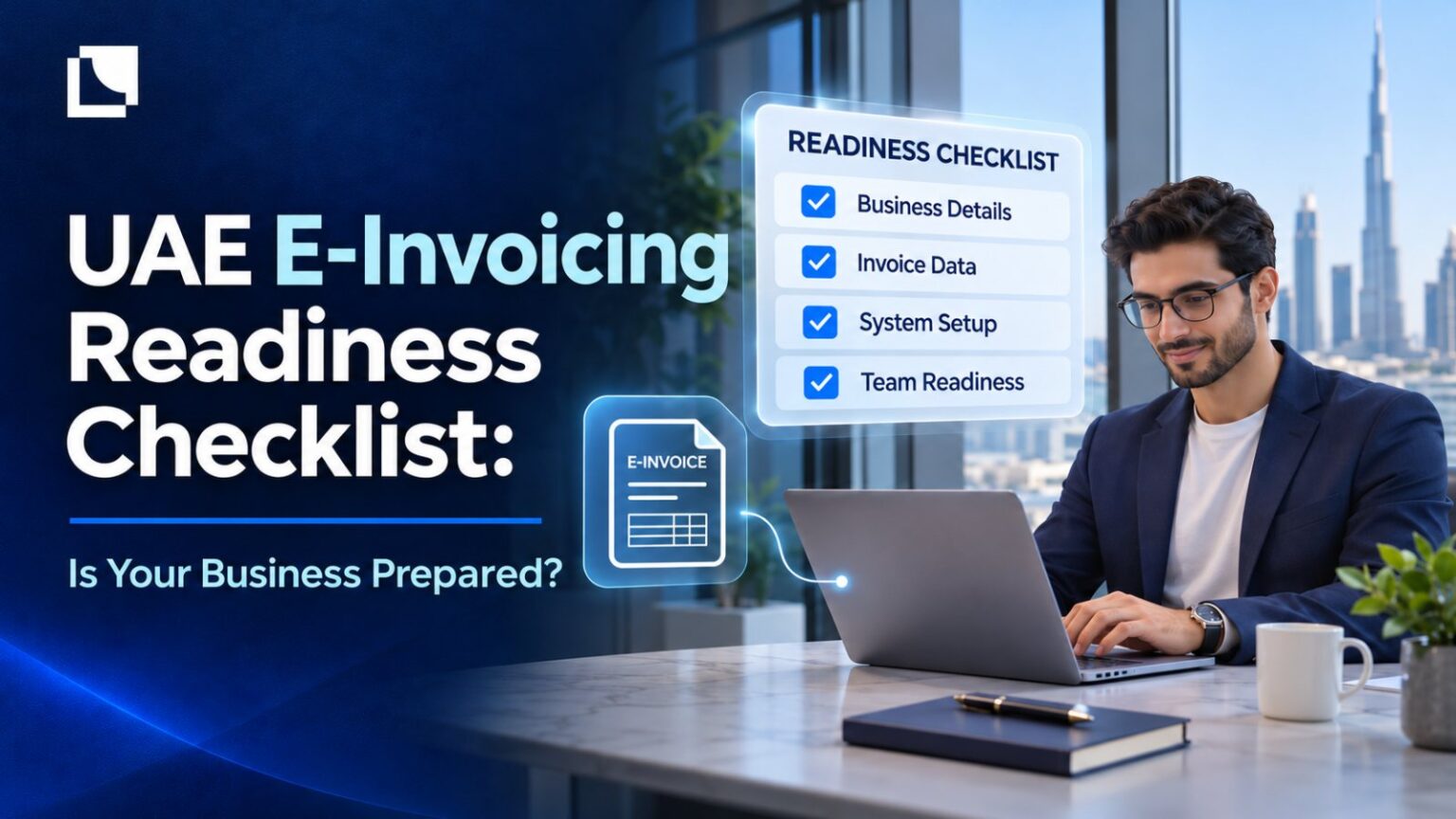
But how do you know whether your business is ready? This UAE E-Invoicing readiness checklist covers the important steps you should take before your applicable implementation deadline.
Understanding UAE E-Invoicing Requirements
UAE E-Invoicing is a system that allows businesses to issue, exchange and report invoice information electronically in a structured digital format. Unlike traditional invoices shared through PDF files, emails or paper documents, e-invoices contain structured data that can be processed automatically by connected systems.
The UAE framework follows the Peppol-based five-corner model. It connects the supplier, the supplier’s Accredited Service Provider, the buyer’s Accredited Service Provider, the buyer and the Federal Tax Authority.
The system is being introduced to improve business efficiency, reduce manual work, support tax compliance and make invoice information easier to exchange between businesses and government entities.
Businesses should understand that simply creating an invoice using accounting software or sending it as a PDF does not make it a compliant electronic invoice.
UAE E-Invoicing Implementation Timeline
The UAE is introducing mandatory e-invoicing in phases. The applicable implementation date depends on the business category and annual revenue.
| Business Category | ASP Appointment Deadline | Implementation Date |
|---|---|---|
| Businesses with annual revenue of AED 50 million or more | 30 October 2026 | 1 January 2027 |
| Businesses with annual revenue below AED 50 million | 31 March 2027 | 1 July 2027 |
| Government entities | 31 March 2027 | 1 October 2027 |
The pilot programme started on 1 July 2026, and voluntary implementation is also available. Businesses should check their applicable phase and the latest Ministry of Finance guidance before planning their transition.
UAE E-Invoicing Readiness Checklist: 10 Things Your Business Must Check
Preparing for UAE E-Invoicing involves more than purchasing new software. Businesses need to review their existing processes, financial information and technology. Here are ten important areas to check.
1. Understand Whether Your Business Falls Within the Scope
Start by checking whether your business transactions fall under the UAE E-Invoicing requirements. The framework generally covers business-to-business (B2B) and business-to-government (B2G) transactions, subject to specific exclusions.
Businesses should not assume they are automatically exempt because they are small, operate in a free zone or are not registered for VAT. Review the official rules to understand how the requirements apply to your business activities.
2. Identify Your Applicable Implementation Deadline
Check your annual revenue and identify the implementation phase that applies to your business. Companies with annual revenue of AED 50 million or more have an earlier implementation date than smaller businesses.
If your ASP appointment deadline has already passed, contact a suitable provider and seek professional guidance immediately. Businesses in later phases should also begin preparations rather than waiting until the final months.
3. Review Your Existing Invoicing Process
Understand how your business currently creates, sends, receives and stores invoices. Some companies use Excel templates, PDF documents or manual processes, while others depend on accounting software.
Review these processes to identify which activities need to change. This will help you understand the level of preparation and system integration your business requires.
4. Check Your Accounting Software Compatibility
Your existing accounting software should be able to work with the technical requirements of the UAE E-Invoicing framework, either directly or through an appropriate integration.
Check whether your current system can manage structured invoice information, connect with an ASP, exchange invoice data and support automated processing. If your software does not offer the required capabilities, you may need an upgrade or another solution.
Explore business invoicing solutions to understand how digital invoicing can support your business processes.
5. Organise Your Customer and Supplier Information
Accurate customer and supplier information is important for successful invoice processing. Review your business records and check that names, addresses, tax identification details and VAT registration information, where applicable, are accurate.
Incomplete or incorrect information can create invoice validation problems. Organising your records in advance can make the transition easier.
6. Review Your Invoice Data and Required Fields
UAE E-Invoicing requires invoice information to follow the prescribed structured data format. Businesses should review the mandatory invoice fields and understand what information needs to be included in different transaction types.
Check your current invoice templates and data collection processes. Make sure your system can capture the required information accurately instead of depending on employees to enter everything manually.
7. Choose an Accredited Service Provider (ASP)
An Accredited Service Provider plays an important role in the UAE E-Invoicing system. It helps businesses connect to the electronic invoicing network, validate and exchange invoice data and support the required reporting process.
Before selecting a provider, consider the following:
- Verify the provider’s official accreditation status.
- Check compatibility with your existing accounting software.
- Review data security and protection measures.
- Understand the pricing and transaction charges.
- Check the availability of technical support.
- Consider whether the solution can support future business growth.
Do not select a provider based only on price. The solution should meet the technical and regulatory requirements applicable to your business.
8. Prepare Your Finance and Accounting Team
Your employees should understand how the new invoicing process will work. Finance teams, accountants and employees handling accounts payable and accounts receivable may need training on the updated procedures.
Explain how invoices will be created, exchanged, checked and stored. Clear responsibilities can help reduce mistakes during the transition.
9. Test Your Invoicing and Integration Workflows
Before moving to the new system, test how invoices are created and exchanged. Check whether the invoice data is accurate, whether the system can connect with the ASP and how validation errors are handled.
Testing helps identify technical problems before they affect daily business operations. It also gives your employees time to become familiar with the new process.
10. Establish a Process for Ongoing Compliance
Preparation does not end when your business starts using e-invoicing. You should maintain accurate invoice records, monitor regulatory updates and establish a process for handling invoice corrections and system issues.
Make sure your business can retrieve the required electronic invoices and related information when requested by the authorities. Under the updated rules, businesses must retain these records for the period prescribed under the Tax Procedures Law.
Common UAE E-Invoicing Preparation Mistakes to Avoid
Some businesses may underestimate the work involved in moving to electronic invoicing. Avoiding these common mistakes can make implementation easier.
- Assuming PDF invoices are compliant: PDF and scanned invoices are not considered structured e-invoices under the UAE framework.
- Waiting until the deadline: Delayed preparation can leave little time for software changes and testing.
- Choosing an unaccredited provider: Verify the provider’s current accreditation status before making a decision.
- Ignoring existing accounting systems: Check whether your software can support the required data exchange.
- Using incomplete business records: Incorrect customer and supplier details can create processing issues.
- Overlooking incoming invoices: Businesses should prepare for both sending and receiving electronic invoices.
- Not training employees: Finance teams need to understand the new processes before implementation.
How to Choose the Right UAE E-Invoicing Software
Choosing suitable e-invoicing software is an important part of preparing your business. The right solution should support your invoicing requirements and work with your existing financial management processes.
When comparing solutions, look for structured invoice generation, automated data validation, accounting system integration, secure invoice exchange, invoice tracking and reliable technical support.
Also consider whether the provider can support your business as transaction volumes increase. A solution that connects invoicing and accounting processes can reduce manual work and help maintain more organised financial records.
For businesses looking for a connected financial management solution, explore accounting software in the UAE.
How LedgerPlus Helps Your Business Prepare for UAE E-Invoicing
Preparing for UAE E-Invoicing can be challenging when your business depends on separate invoicing, accounting and financial management processes. Having a connected solution can make it easier to manage financial information and reduce repetitive manual tasks.
LedgerPlus provides an AI-powered accounting and financial management solution for businesses in the UAE. Its services combine software capabilities with accounting support to help businesses manage their financial operations.
Businesses can explore LedgerPlus E-Invoicing solutions to understand the available invoicing and integration support. Before choosing a solution, discuss your current accounting system, transaction requirements and applicable compliance deadlines with the team.
Whether you are upgrading an existing system or preparing your business for electronic invoicing for the first time, reviewing your requirements early can help you make a better decision.
Ready to prepare your business for UAE E-Invoicing? Explore LedgerPlus E-Invoicing or contact our team to discuss your business requirements.
Conclusion: Start Preparing Your Business for UAE E-Invoicing
UAE E-Invoicing will bring important changes to how businesses manage invoices and exchange financial information. Preparing early gives companies more time to review their existing systems, organise business records, choose a suitable ASP and train their employees.
Do not wait until your implementation deadline to start making changes. Review your current invoicing process, identify what needs improvement and select a solution that supports your business requirements.
Looking for a solution to prepare your business for UAE E-Invoicing? Explore LedgerPlus E-Invoicing and take the next step towards more organised digital invoicing.
Frequently Asked Questions About UAE E-Invoicing
1. Is UAE E-Invoicing mandatory for all businesses?
The system applies to businesses carrying out in-scope B2B and B2G transactions, subject to the exclusions and phased implementation rules. Businesses should review the official requirements to determine their obligations.
2. When does UAE E-Invoicing become mandatory?
Businesses with annual revenue of AED 50 million or more must implement the system by 1 January 2027. Businesses with revenue below AED 50 million must implement it by 1 July 2027. Government entities have an implementation date of 1 October 2027.
3. Can businesses continue using PDF invoices?
PDF invoices are not considered structured electronic invoices under the UAE framework. Businesses subject to the requirements must use a compliant electronic invoicing process for transactions within scope.
4. Do small businesses need to adopt UAE E-Invoicing?
Small businesses may also fall within the scope of the system. Businesses with annual revenue below AED 50 million have a later implementation phase, with a deadline of 1 July 2027.
5. Is e-invoicing mandatory for businesses not registered for VAT?
VAT registration status alone does not determine whether a business is within the scope of e-invoicing. Businesses should assess their activities and transactions against the applicable regulations.
6. What is an Accredited Service Provider (ASP)?
An ASP is an accredited provider that helps businesses connect to the UAE electronic invoicing network and exchange structured invoice information in accordance with the prescribed requirements.
7. Can I use my existing accounting software for UAE E-Invoicing?
Possibly. Your existing software may be suitable if it can support the required technical specifications and connect with an ASP. Check compatibility with your software provider before implementation.
8. What happens if a business is not ready by its implementation deadline?
Businesses that fail to meet applicable legal requirements may face administrative penalties under the relevant UAE regulations. They should review the official rules and seek professional advice to avoid non-compliance.
9. Do businesses need to support both sending and receiving electronic invoices?
Yes. Businesses should prepare their processes for both issuing and receiving structured electronic invoices for applicable transactions.
10. How can LedgerPlus help businesses prepare for UAE E-Invoicing?
LedgerPlus offers accounting and financial management solutions that help businesses manage their invoicing and accounting processes. Contact the team to discuss the available e-invoicing solution and your specific requirements.